Tuesday, August 21, 2007
`The Full Panoply of Speech'
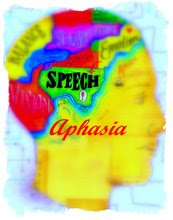
This word-drunk writer, who described purple prose as “the style of extreme awareness,” suffered a stroke in June of 2003 that left him with global aphasia, the loss of speech both spoken and written, its expression and comprehension. The stroke killed cells in the Broca’s area (speech production, language comprehension) and the Wernicke’s area (language comprehension) of the brain. His wife, writer Diane Ackerman, calls his condition “the curse of a perpetual tip-of-the-tongue memory hunt.” Rather than resign himself to the limbo of the language-less, West laboriously composed a memoir, The Shadow Factory, parts of which have been published in The American Scholar, and has also finished writing his first post-stroke novel. To place the accomplishment in perspective, imagine Dr. Oliver Sacks writing one of his portraits in applied epistemology from the point of view of a patient who has suffered a neurological catastrophe. Here’s a triumphant excerpt:

Wednesday, August 1, 2007
Aphasia Help
| ||||

| Aneurysm Welcome to the Brain Aneurysm Foundation's message board. |
 |
| | Thread Tools  | Display Modes |
| #1  07-16-2007, 02:25 PM 07-16-2007, 02:25 PM | |||
| |||
 Aphasia help Aphasia help Hello all. Thanks again for all the advice and support you have already provided; it is much appreciated! New question: One of the biggest hurdles right now is aphasia. Does anyone know of any resources out there that could help me locate a highly regarded professional to assist Dad with regaining his speech and comprehension of speech? Thanks, Maggie PS Dad is coming home on Wednesday. He has a follow up with the Neuro. this Friday, so things are moving fast.  |

| #2 07-16-2007, 06:41 PM | |||
| |||
| Maggie - speech therapy is usually the best, with some exercises that you can do when the therapist isn't. Speech is a problem for alot of us - much more with a rupture, depending on location. Talk to the neurologist - he'll be able to tell you which way to go! Prayers to your Dad. __________________  Chris ChrisGod allows life to be rocky. His challenge is not to let the rocks grind you to dust, but to polish you to become a brilliant gem. Anon |
| #3 07-16-2007, 07:02 PM | |||
| |||
 Hi hun Hi hun http://www.aphasia.org/ I found this site for you, it is the "National Asphasia Association" I hope it helps you? I will have to read more about it myself. Take care, Tricia |
| #4 07-16-2007, 11:15 PM | |||
| |||
 Ask hospital staff (social worker, nurse, NS) if they could order speech therapy for your dad. See if his insurance will cover it...... some places even insure home health speech therapy if it is hard to get him out. They do onders for stroke patients. You and your family are in our prayers. Wishing your dad a good recovery. Lori |
| #5 07-17-2007, 12:42 AM | |||
| |||
| Yes, speech therapist works with this problem. Some of the things that I watched and tried with Ray was using picture cards to try to get them to say the picture or just use items in the home.. spoons, knife, glass etc. I even put labels on cupboards to tell him what it was.. he could not tell me a glass but he could read it.. If your insurance lets you have homecare... they have speech therpist that came to the home.. actually I think she did a great job.. by the time he was ready for outpatient... I think the homecare did a really through job in helping him at home.. Good Luck and prayers for your dad and family __________________ Becky, wife of an Annie survior 1/9/06 |
| #6 07-17-2007, 12:05 PM | |||
| |||
| thank you and please let me clarify Thanks guys. I should've been more specific. I guess what i was trying to ask is if there's a place to look online/elsewhere to find a highly regarded speech pathologist in our area (Northern VA, just South of DC). Someone with extensive experience in treating aphasia. I've checked out the link that FireflyR7 posted (thanks!) and printed a list of people in this area but i have no clue how to determine which ones are reputable. We can always go the route of trial and error but would rather know ahead of time and not waste time and money. This might sound judgemental, but i've seem some good therapists and some that were not as good at his rehab. and have seen the difference in how Dad reacts and the progress made. I'm sure insurance will play a part in this too but i would like to get the best treatment our money can afford. Thanks, Maggie |
| #7 07-17-2007, 12:51 PM | |||
| |||
 Hi Maggie Hi Maggie  Your welcome hun!! You could probably "Google" "speech pathologist" and find all of them in your area? If you have private insurance they should be able to reccomend one! Your welcome hun!! You could probably "Google" "speech pathologist" and find all of them in your area? If you have private insurance they should be able to reccomend one!  Did the NS reccomend any? They should know who the best is?? There are a lot more sites if you type "aphasia" in your search. There is a book called, "THE MILD TRAUMATIC BRAIN INJURY WORKBOOK" that my sis got for us and it helped us to understand a lot!! there are also puzzles, exersizes and evaluations in it when he is ready for it. It was very helpful to my family! Did the NS reccomend any? They should know who the best is?? There are a lot more sites if you type "aphasia" in your search. There is a book called, "THE MILD TRAUMATIC BRAIN INJURY WORKBOOK" that my sis got for us and it helped us to understand a lot!! there are also puzzles, exersizes and evaluations in it when he is ready for it. It was very helpful to my family!I had a rupture 2 years ago and I am still having problems with my speech, coordination, cognitive skills... But, I have not gone to therapy. I couln't afford the co-pay!  I have used word circle books, play scrabble and use a dictionary. Play my brain memory game, write poetry, listen to music... I have used word circle books, play scrabble and use a dictionary. Play my brain memory game, write poetry, listen to music...I talk to my sister everyday, hubby works with me when he is home. I have improved immensly, even on my own!!  I think it just mostly takes time, I hope you find a good therapist!!! I wish I could have gone to one! I still get frustrated sometimes! I will be keeping you in my prayers, please keep us posted! Tricia |
| #8 07-17-2007, 05:38 PM | ||||
| ||||
| Hi Maggie..your post caught my eye because I also had to have speech,along with OT/PT after my clipping. My hosp. had all that, I went for 9 months and it helped so much.They had a speech pathologist come in from the city of St. Paul on the day's I had PT. Check into the hosp in your area I'm sure they can help you with this. ooxx mimi __________________ **** Life should NOT be a journey to the grave with the intention of arriving safely in an attractive and well preserved body. But rather to skid in sideways, chocolate in hand, body thoroughly used up, totally worn out screaming “WOO-HOO what a ride!”**** |
Sunday, July 15, 2007
01:30 pm - 6-05 National Aphasia Awareness Month
The following column was published in the June 2005 issue of The Woman's Page http://www.thewomanspage.net
National Aphasia Awareness Month
By Stacey Anter
For The Woman’s Page
Last month my husband and I experienced something that we thought couldn’t happen to us again. After losing one best friend several years ago to an aneurysm, we were close to losing another friend to the same medical incident. A close friend of ours, who has a congenital heart condition, and smokes, suffered a blood clot that rendered him temporarily speechless, or aphasic. Luckily, we were with him at the time and we were able to get him to the emergency room immediately. We had gone out to eat and we were talking about music when we noticed that something wasn’t right. Our friend is a musician and quite knowledgeable on the topic of discussion, but when he paused to think and was basically speechless, we knew something was wrong. After bringing him to the ER, he seemed better and could speak again, but given his medical history, the doctor admitted him for further testing anyway. Two days later, after MRIs, CAT scans, and several blood tests, it was determined that he had a blood clot that pressed against the speech part of the language center of his brain. His mother brought up a scary thought, “imagine if the aphasia never went away.”
According to the National Aphasia Association, aphasia is “an impairment of language, affecting the production or comprehension of speech and the ability to read or write.” It is caused by a brain injury usually from a stroke, but it can also be attributed to head trauma, brain tumors, or infections. Our friend later explained that he knew what he wanted to say, but he just couldn’t articulate it; he felt like he was enclosed in a box and couldn’t get out. Imagine living like that for the rest of your life. Imagine having all your marbles, so to speak, but not being able to play with them. I understand it is heartbreakingly frustrating to have a thought or idea to relay without a way in which to communicate it. A simple game of charades gets frustrating when your gestures aren’t understood. Now, do that everyday, and see how angry and depressed you get.
On their website, the NAA writes that approximately one million people in the U.S. have aphasia, and that there are varieties and special features of aphasia. People with global aphasia, which is the most severe, “can neither read or write” and they can “produce few recognizable words and understand little or no spoken language.” With Broca’s aphasia, “speech output is severely reduced and is limited to short utterances, of less than four words.” Mixed non-fluent aphasia is characterized by “sparse and effortful speech, resembling severe Broca’s aphasia. However,….they remain limited in their comprehension of speech and do not read or write beyond an elementary level.” Wernicke’s aphasia shows impairment in the comprehension of speech, but the production of fluent speech is not impaired. Anomic aphasia is “applied to persons who are left with a persistent inability to supply the words for the very things they want to talk about –particularly the significant nouns and verbs.”
The National Aphasia Association website http://www.aphasia.org provides many informative and helpful resources on aphasia for adults and children. Books on aphasia for adults include: Coping with Stroke: Communication Breakdown of Brain Injured Adults by H. Broida; Talking About Aphasia: Living With Loss of Language After Stroke by Sally Byng, Sue Gilpin, Chris Ireland, and Susie Parr; It’s on the Tip of My Tongue by Diane German, Ph.D. The NAA also provides titles appropriate for children: Look Inside Your Brain by Heather Alexander, appropriate for ages 8 and up; Nana’s Stroke: A counseling storybook for children by Barbara Baird; and The Woman Who Lost Her Words: A Story of Stroke, Speech and Some Healing Pets by Julianne Labreche, CCC-SLP, appropriate for ages 8 and up. Aphasia.org also has other personal accounts, newsletters, videos, DVDs, and other resources.
The brain is the most amazing organ in the human body. Mysteries of the brain remain unsolved regardless of continuing research. I once new an elderly deaf woman who could still communicate in sign language after suffering a terrible stroke that had affected the language center of her brain. For people who suffer from aphasia, there is help and support. What my friend’s mother said about what-ifs humbled my friend, and all of us. Needless to say, our friend is taking a blood thinner to prevent blood clotting. And we are so very glad that we were there to help him and get him to medical treatment at a moment’s notice. As a given, our friend can be quite a talker sometimes, as we both know, but we love him like family anyway. He’s the kind of person who can and does joke about the speechlessness. But naturally, aphasia really isn’t a laughing matter. What is also a given: He was extremely lucky.
I call myself the Library Detective because I can find the answers to any question you can think of, or at least I can point you in the right direction. To find out more about aphasia, visit your local library; there are more Library Detectives there, too.
Sunday, July 1, 2007
Some words of inspiration and pride Part 2
See first:
http://brain.hastypastry.net/forums/...ad.php?t=16638
By the time I returned to my wife's room, she was almost ready to be transported to surgery. Within a few more minutes, she was in the surgical suite. Now for a strange phenomenon as my wife can remember her Neurosurgeon being very curt with the anesthesiologist. In effect, he chided him with the words: "Hurry up, get her under, I need to get in there." He corroborates her "memory" of the incident. Following surgery, my wife had a small diameter tube beneath her scalp into the cavity to evacuate blood and other fluids. In a dramatic one-step procedure the doctor simply "yanked" this out about five days later.
Once the intra-cranial pressure was relieved, my wife continued to improve. However, despite the fact that my wife could not speak and would not be able to speak for another month, the doctor did counsel that the long-term effects would be expressive aphasia and short-term memory loss. Likewise, he was uncertain as to the recovery of right side motor functions. Further, he asserted that an additional craniotomy would be required to remove the actual AVM. (It's where a vein and an artery are directly connected without an intervening set of capillaries. In as much as its not a normal connection, it's a weak path. This is the "connection" that burst.) In my wife's case, this AVM was no larger than a "pea".
In the two months following, my wife regained her speech and right side motor control. However, as the doctor related, she is forever beset with the deficits of expressive aphasia and short-term memory loss. But, she can speak and most people do understand her. Its just that in reading a sentence of twenty-five words, she will "substitute and speak" five words that are totally unrelated.
Next, we visited with the doctor who indicated that prior to the next craniotomy, he wanted my wife to undergo an embolization process. This is where a catheter is introduced into a vein in the groin and directed through the heart and neck into the brain. The purpose is to seal the vein (in anticipation of surgery) with "crazy glue". Yes, that's what it is, but its medical purity (made only in France). So after several hours on the table (fully awake as they needed to perform tests while she was alert), the doctor leaned over to my wife and said that he could not continue, as her veins were too narrow to safely perform the procedure. This occurred despite the overnight IV that "relaxed" the veins with a derivative of curare. As often as I relate this procedure, I still have chills and I tell folks that I would be "wetting my shorts" if I were required to have the same course of action.
Now she would face the surgery without the extra measure of safety. So, in early December, she had her second craniotomy. This was uneventful and she was home within a week of the surgery. However, the doctor related that there was a "tiny" vein that he feared removing as its elimination might be extremely debilitating to my wife's speech center. In effect, she could lose all speech faculties.
NEXT...............
http://brain.hastypastry.net/forums/...ad.php?t=16638
By the time I returned to my wife's room, she was almost ready to be transported to surgery. Within a few more minutes, she was in the surgical suite. Now for a strange phenomenon as my wife can remember her Neurosurgeon being very curt with the anesthesiologist. In effect, he chided him with the words: "Hurry up, get her under, I need to get in there." He corroborates her "memory" of the incident. Following surgery, my wife had a small diameter tube beneath her scalp into the cavity to evacuate blood and other fluids. In a dramatic one-step procedure the doctor simply "yanked" this out about five days later.
Once the intra-cranial pressure was relieved, my wife continued to improve. However, despite the fact that my wife could not speak and would not be able to speak for another month, the doctor did counsel that the long-term effects would be expressive aphasia and short-term memory loss. Likewise, he was uncertain as to the recovery of right side motor functions. Further, he asserted that an additional craniotomy would be required to remove the actual AVM. (It's where a vein and an artery are directly connected without an intervening set of capillaries. In as much as its not a normal connection, it's a weak path. This is the "connection" that burst.) In my wife's case, this AVM was no larger than a "pea".
In the two months following, my wife regained her speech and right side motor control. However, as the doctor related, she is forever beset with the deficits of expressive aphasia and short-term memory loss. But, she can speak and most people do understand her. Its just that in reading a sentence of twenty-five words, she will "substitute and speak" five words that are totally unrelated.
Next, we visited with the doctor who indicated that prior to the next craniotomy, he wanted my wife to undergo an embolization process. This is where a catheter is introduced into a vein in the groin and directed through the heart and neck into the brain. The purpose is to seal the vein (in anticipation of surgery) with "crazy glue". Yes, that's what it is, but its medical purity (made only in France). So after several hours on the table (fully awake as they needed to perform tests while she was alert), the doctor leaned over to my wife and said that he could not continue, as her veins were too narrow to safely perform the procedure. This occurred despite the overnight IV that "relaxed" the veins with a derivative of curare. As often as I relate this procedure, I still have chills and I tell folks that I would be "wetting my shorts" if I were required to have the same course of action.
Now she would face the surgery without the extra measure of safety. So, in early December, she had her second craniotomy. This was uneventful and she was home within a week of the surgery. However, the doctor related that there was a "tiny" vein that he feared removing as its elimination might be extremely debilitating to my wife's speech center. In effect, she could lose all speech faculties.
NEXT...............
Diminishing Returns
During the two years leading up to his diagnosis, my husband, a highly respected physician, struggled to communicate and complete work, left me in doubt about his truthfulness, accumulated debt I was unaware of and wrote a series of notes that I found bizarre and degrading. Yet he often seemed so loving and well. I wondered if the insanity began with me.
Skip to next paragraph 
Bob Hambly
Submissions for Lives may be sent to lives@nytimes.com. The magazine cannot return or respond to unsolicited manuscripts.
Doctors finally explained the degenerative brain disorder in 2005, when he was 59. I’d never heard of primary progressive aphasia, a type of frontotemporal dementia that can devastate language skills and incite behavior mistaken for psychiatric disorders. Symptoms can sometimes be confused with those of Alzheimer’s, but in the early stages memory remains relatively preserved. Over time, however, the illness can seriously impair not only language but also insight, judgment and personality, usually in people under 65.
Despite the diagnosis, we kept our long-held plans for a family vacation. But at the last moment my husband said he wanted to stay home to clean the garage, insisting the kids (two, from my first marriage) and I travel anyway. Reluctantly, we acquiesced. During the trip he called daily and e-mailed to gush that he missed me “soooo much.”
Back home, one step in the entry hall changed everything.
“By the way,” he said without prelude, “I filed for divorce.”
“What? What?” These were gasps, not words.
“I filed for divorce!”
During our absence he had also moved into an apartment and sought a court order to keep me from talking publicly about his illness. All while professing his devotion.
The next morning, as I was still reeling, he stopped by the house to ask me on a “date.” And so began a cycle in which, each week, he courted me and then left me feeling damaged and discarded. Knowing the illness caused his behavior and yet somehow believing I could change it, I accepted every invitation. Six weeks later, for our anniversary, he invited me to dinner and gave me the book “Married for Life: Inspirations from Those Married 50 Years or More.” Minutes later he yelled, “You need to get a divorce!” Repeatedly, he accused my children and me of stealing belongings he had actually misplaced. His only explanation: “No answer necessary.”
Still, I begged and battled to save the marriage, exploring legal options as well. But halting the divorce required proving that he was incompetent in court — shaming him into accepting my care. Was that the right way to help? Then what? How would I protect the children? And so I let him go. But he stayed.
Following the divorce, seven months after he moved out, I received flowers and an invitation to New York City. I kept pursuing these glimpses of my husband with undeterred passion. A sparkle in his eye, the lilting laugh, dinner conversation not taken for granted but savored. In those moments, I reconnected with the man I fell in love with — only to lose him over and over again, because he wasn’t really there.
He declared our remarriage imminent. But certain things can’t be undone. Our family was irretrievably broken. Without a word, he had left two children he adored and nurtured for years. Now his kindness always led to what felt like indifference or cruelty, and the kids finally understood that they could not alter or endure it. They decided they wanted to say goodbye, so I arranged a meeting in the neighborhood park.
By this time, Chris was a 13-year-old lurching into manhood. Courageously, he stepped forward. “Thank you for being such a great stepfather,” he said. “You were a really important person in my life, and I’m glad I knew you.” They hugged; both started to cry. Alison, 11, took a tentative step. “Thank you.” She squeezed his waist, and he returned the gesture. My fingers stroked his silver hairline. “I love you,” I said.
Eventually we waved and eased away. “I’m lonely!” he cried. We hurried to embrace him. He sobbed uncontrollably. When his breathing found a rhythm, I whispered: “You’re part of our family. We’ll always be here for you.” He nodded and talked about going running before departing too slowly, an air of fragility around the former competitive athlete and intellectual powerhouse.
Two years later he maintains (barely, in my view) a solo existence a half-mile from me. In a life clouded with loss, acceptance does not include “getting over it,” because I’ll always miss the man I married. Our connection — despite the whims of a relentless disease — endures. But the continual yearning, rejoicing and mourning, a destructive pattern worse than death, demands emotional distance. Otherwise the illness will take two people. And he wouldn’t want that.
Three Little Words
Wednesday, February 14 2007
Three Little Words
Juan Hairston
Juan Hairston had a stroke when she was in her thirties. The stroke damaged her ability to speak. She's made a lot of progress, but 6 years later, she still has trouble finding and saying certain words, mainly nouns. Juan's condition is called aphasia.
Juan always knew there was a possibility she could have a stroke because they run in her family. She now uses a small device which helps her to convey a word she can't say herself: she types the word and the device says it for her.
Juan and Vern
But her story is about more than recovery and regaining the ability to speak. It's also about finding love. Juan was waiting for a ride home one day when she met a blind man with a beautiful voice. His name is Vernon Richmond.
Vernon joins Juan in the studio to talk with Dick Gordon about finding love and a new life at the Veterans Administration Hospital.
Eldering; bettering the odds...
This is a post I've been thinking about for a long time, and one I'm very reluctant to write; I'm not much into "confessional" writing of any kind, and this post will have to be a lot more personal than I feel comfortable with. I may write the whole thing and then chicken out on posting it; we'll see.
Two things have persuaded me that the necessary degree of personalness is justified and that I should just set aside my squeamishness and write the cottonpicking thing. [I say to myself, "So you're going to write about your undergarments; so what?" And Myself says back, "So that's tacky, that's what." And Myself and I argue back and forth a while.]
The first of those two persuasive things was the article that I posted a link to recently about the crisis in geriatric medicine, with its startling dictum that the doctor must always take off the elderly patient's shoes and stockings and examine that patient's bare feet, because of the information that will provide about the level of functioning and/or the level of care. The second thing was watching the second bonus disk in our Star Wars set -- an excellent documentary about the move to computer animation in those movies, with the major focus on the move from a puppet Yoda to a computer-generated Yoda. And there was George Lucas telling the animators that they had it all wrong, that the computer Yoda was very very old, and that they weren't getting that fact across in their animations. After a very old person rushes across a room, he told them, that very old person is going to be out of breath, and you have to show that. They were putting too much bounce in the computer Yoda's step, he told them. They weren't showing the viewers the computer Yoda's aches and pains, he told them. They were making the computer Yoda stand up too straight, he told them. He reminded them of how this had been handled with the puppet Yoda, who was being operated by someone who was himself growing old. And he kept having to tell them all of this over and over and over again. The animators just didn't get it. Not because they weren't trying, and not because they weren't, one and all, brilliant; they didn't get it because they were young, and they simply weren't able to imagine what being very old would be like. So, here I am....
Suppose that I, like my grandmother, live to be 96 -- or even, like my mother, to be only 86. Suppose that at some point I am visited with a disorder that robs me of coherent speech... a stroke, a dementia, an aphasia of some kind. Suppose that disorder puts me to bed for good, in the care of others. [Suppose our benighted governments and populations haven't managed by then to destroy Civilization As We Know It, so that there will still be places where very old people are looked after.] There are then two things, both very personal, that I'm afraid of.
The first thing any caretaker would do is throw away my undergarments. And I know what that caretaker would be thinking, and probably saying: "This woman, poor old thing, has entirely lost it!" I was so humiliated when I got strip-searched in the Seattle airport and there was no way to keep the two women who did that task from seeing my undergarments. Rags and tatters -- mended and darned and patched, and nevertheless in ghastly disrepair. If I'm able to speak coherently I can explain. I can explain that my slips are in tatters because the Velcro fastenings on my back brace tear them up; if I bought a new slip every single week, by the end of that week it would be in tatters. I can explain that my clothing hurts me, and that when I find an undergarment that's only uncomfortable -- as opposed to setting off a cascade of muscle spasms and nerve pain -- I treasure it. For me, it's priceless; and I will wear it until it literally falls apart, mending it until it's made up mostly of mends and darns. If I'm able to speak coherently, I can explain that, and my twisted spine will probably make what I say believable. But if I'm not? Then I know what people will think, and I know quite well what they'll say; I've heard other caretakers saying things like that about other elders, many a time -- and I've thought to myself, "I wonder what you don't know."
The other thing I'm afraid of is the pain that I won't be able to explain. Unless the head of my bed is raised four or five inches I'll have severe heartburn; probably somebody will see to that, because that disorder is in my medical records, and with any luck at all I can count on the caretakers to know about it. But they won't know that unless the foot of my bed is also raised a few inches I'll have severe leg pain, because that's a mechanical problem, not a recognized "medical condition," and it's not going to be noted anywhere. And although my medical records will tell them that I have the condition called "dry eye" -- a very common side effect of cataract surgery -- they won't know that if I lie on my right side for more than ten minutes or so I'll have agonizing pain in my right eye because that position somehow cuts off completely the mechanism that keeps that eye moist. If I'm capable of coherent speech, I'll be able to explain those things. But if I'm not? Then people will be able to see that something is hurting me, but they won't have any idea what it is. They may routinely turn me onto my right side, with the best of intentions, because that's part of the protocol for preventing pressure sores. And if what they do for the pain that they don't understand is give me narcotics, pretty soon the cornea in my right eye will be so severely damaged that I'll lose the sight in that eye. Maybe that will be noticed; maybe not.
Various strategies occur to me, of course. (1) Tell my children. Sure; but I've already outlived one of my sons and one of my daughters-in-law. My children may not be there. (2) Carry a letter on my person that contains the information about these two things, and add it to my Medic-Alert records. But I know from experience that the chances are that the letter wouldn't be found or read. Even if it's in an "advance directive," I know how slim the chances are that all the information in the directive will be passed on to the various caretakers. And the Medic-Alert information? Three times in the past twenty years, a minor misadventure has sent me to an emergency room -- and all three times, nobody ever noticed that I was wearing a Medic-Alert bracelet, much less checked it to see what it said or called the 800 number on it to find out what was in my file. The strategies seem obvious enough, but they're full of loopholes.
So -- getting to the point here at long last -- what I'd like to do is urge you younger people to talk to your own elders and find out if there are things that you ought to know. Things like "Please don't ever give him sweetened tea to drink; he despises it." Things like "Please don't ever turn him on his right side and leave him that way for more than five minutes." Things like "Please don't leap to conclusions about the reasons for the state of her clothing; there are very good reasons for that." I'd like to urge you to find out these things now, and then to make sure that the younger people in the family -- or the younger friends in the social circle -- also know these things, just in case you're no longer around when the time comes to talk to the caretakers. That may not be enough, given the way things are going, but it will at least better the odds a bit in your elders' favor. It's worth a try.
Two things have persuaded me that the necessary degree of personalness is justified and that I should just set aside my squeamishness and write the cottonpicking thing. [I say to myself, "So you're going to write about your undergarments; so what?" And Myself says back, "So that's tacky, that's what." And Myself and I argue back and forth a while.]
The first of those two persuasive things was the article that I posted a link to recently about the crisis in geriatric medicine, with its startling dictum that the doctor must always take off the elderly patient's shoes and stockings and examine that patient's bare feet, because of the information that will provide about the level of functioning and/or the level of care. The second thing was watching the second bonus disk in our Star Wars set -- an excellent documentary about the move to computer animation in those movies, with the major focus on the move from a puppet Yoda to a computer-generated Yoda. And there was George Lucas telling the animators that they had it all wrong, that the computer Yoda was very very old, and that they weren't getting that fact across in their animations. After a very old person rushes across a room, he told them, that very old person is going to be out of breath, and you have to show that. They were putting too much bounce in the computer Yoda's step, he told them. They weren't showing the viewers the computer Yoda's aches and pains, he told them. They were making the computer Yoda stand up too straight, he told them. He reminded them of how this had been handled with the puppet Yoda, who was being operated by someone who was himself growing old. And he kept having to tell them all of this over and over and over again. The animators just didn't get it. Not because they weren't trying, and not because they weren't, one and all, brilliant; they didn't get it because they were young, and they simply weren't able to imagine what being very old would be like. So, here I am....
Suppose that I, like my grandmother, live to be 96 -- or even, like my mother, to be only 86. Suppose that at some point I am visited with a disorder that robs me of coherent speech... a stroke, a dementia, an aphasia of some kind. Suppose that disorder puts me to bed for good, in the care of others. [Suppose our benighted governments and populations haven't managed by then to destroy Civilization As We Know It, so that there will still be places where very old people are looked after.] There are then two things, both very personal, that I'm afraid of.
The first thing any caretaker would do is throw away my undergarments. And I know what that caretaker would be thinking, and probably saying: "This woman, poor old thing, has entirely lost it!" I was so humiliated when I got strip-searched in the Seattle airport and there was no way to keep the two women who did that task from seeing my undergarments. Rags and tatters -- mended and darned and patched, and nevertheless in ghastly disrepair. If I'm able to speak coherently I can explain. I can explain that my slips are in tatters because the Velcro fastenings on my back brace tear them up; if I bought a new slip every single week, by the end of that week it would be in tatters. I can explain that my clothing hurts me, and that when I find an undergarment that's only uncomfortable -- as opposed to setting off a cascade of muscle spasms and nerve pain -- I treasure it. For me, it's priceless; and I will wear it until it literally falls apart, mending it until it's made up mostly of mends and darns. If I'm able to speak coherently, I can explain that, and my twisted spine will probably make what I say believable. But if I'm not? Then I know what people will think, and I know quite well what they'll say; I've heard other caretakers saying things like that about other elders, many a time -- and I've thought to myself, "I wonder what you don't know."
The other thing I'm afraid of is the pain that I won't be able to explain. Unless the head of my bed is raised four or five inches I'll have severe heartburn; probably somebody will see to that, because that disorder is in my medical records, and with any luck at all I can count on the caretakers to know about it. But they won't know that unless the foot of my bed is also raised a few inches I'll have severe leg pain, because that's a mechanical problem, not a recognized "medical condition," and it's not going to be noted anywhere. And although my medical records will tell them that I have the condition called "dry eye" -- a very common side effect of cataract surgery -- they won't know that if I lie on my right side for more than ten minutes or so I'll have agonizing pain in my right eye because that position somehow cuts off completely the mechanism that keeps that eye moist. If I'm capable of coherent speech, I'll be able to explain those things. But if I'm not? Then people will be able to see that something is hurting me, but they won't have any idea what it is. They may routinely turn me onto my right side, with the best of intentions, because that's part of the protocol for preventing pressure sores. And if what they do for the pain that they don't understand is give me narcotics, pretty soon the cornea in my right eye will be so severely damaged that I'll lose the sight in that eye. Maybe that will be noticed; maybe not.
Various strategies occur to me, of course. (1) Tell my children. Sure; but I've already outlived one of my sons and one of my daughters-in-law. My children may not be there. (2) Carry a letter on my person that contains the information about these two things, and add it to my Medic-Alert records. But I know from experience that the chances are that the letter wouldn't be found or read. Even if it's in an "advance directive," I know how slim the chances are that all the information in the directive will be passed on to the various caretakers. And the Medic-Alert information? Three times in the past twenty years, a minor misadventure has sent me to an emergency room -- and all three times, nobody ever noticed that I was wearing a Medic-Alert bracelet, much less checked it to see what it said or called the 800 number on it to find out what was in my file. The strategies seem obvious enough, but they're full of loopholes.
So -- getting to the point here at long last -- what I'd like to do is urge you younger people to talk to your own elders and find out if there are things that you ought to know. Things like "Please don't ever give him sweetened tea to drink; he despises it." Things like "Please don't ever turn him on his right side and leave him that way for more than five minutes." Things like "Please don't leap to conclusions about the reasons for the state of her clothing; there are very good reasons for that." I'd like to urge you to find out these things now, and then to make sure that the younger people in the family -- or the younger friends in the social circle -- also know these things, just in case you're no longer around when the time comes to talk to the caretakers. That may not be enough, given the way things are going, but it will at least better the odds a bit in your elders' favor. It's worth a try.
Thursday, June 28, 2007
Man wakes after 19-year coma, discovers Poland is no longer communist
 With all the knowledge the medical community has about how our bodies function, I find it amazing that some people recover from illnesses in a way that's beyond explanation.
That's the case with Jan Grzebski, a Polish man who fell off a train in 1988, slipped into what appeared to be a coma for 19 years. After nearly two decades of being almost completely isolated from society, he recently "woke up," and has since been re-acclimating himself with the world.
At the time of Grzebski's accident, Poland lived under communism, but only months after they held their first free election and became a democratic society. He tells the Guardian newspaper: "Everything is new," and "The clothes are much better." But he adds: "Things were simpler in 1988. Now everything is colorful and everyone talks constantly on their mobile phone and moans, even a three-year-old child."
According to doctors, Grzebski wasn't actually in a coma, but conscious the entire time. Even though he was paralyzed and suffering from aphasia (a condition in which you lose the ability to produce or understand language), he was still able to hear his wife when she spoke -- but wasn't able to respond.
Now the pair have the rest of their lives to catch up on all that they missed over the last 20 years.
Life after a stroke; Aphasia often a misunderstood condition
 Barb McCullough's stroke sometimes makes it hard to communicate with her grandchildren, Learah, sitting with her, and Graeme, standing in back, and her daughter Koreen. Barb holds a recent pencil drawing of her two daughters when they were young.; In 2002 Barb McCullough suffered a stroke due to an aneurysm - a weakening or bulging in the wall of a blood vessel - and now deals with a condition called aphasia. The stroke, which left Barb with limited use of her right hand, has meant dramatic changes in how she uses her hands. She is able to hold utensils in her right hand and cut with her left, and is being strongly encouraged to rekindle the use of her right hand and "challenge" it to improve.
It's amazing how things can change in the blink of an eye - or overnight. For Barb McCullough, in August 2002, it happened over dinner.
"I'll never forget that day," says husband Ken Snider.
Ken and Barb, of Fonthill, were up at their family's cottage on Buckhorn Lake in the Kawarthas.
After finishing 18 holes of golf, Ken remembers them going back to the cottage, making dinner, doing dishes, then sitting and talking across the table.
"I got up to go to the living room and heard a weird sound come out of Barb," he says. "The right side of her face dropped, her right arm dropped and she slouched down over the table."
Barb does not remember this.
Barb, 47 at the time, suffered a stroke due to an aneurysm - a weakening or bulging in the wall of a blood vessel - and now deals with a condition called aphasia. It's a disorder that results from damage to portions of the brain that are responsible for language.
In most cases, Barb's included, aphasia occurs suddenly and in the left side of the brain due to a stroke or head injury.
Although she is able to comprehend what's going on around her and generally knows what people are saying, she is unable to fully put into words what she would like to say or what she is thinking.
She has a few words which are the basis for how she communicates, and says them often with hopes they are being received and understood by the listener.
Based on facial expressions, hand gestures and tone, a single word or phrase can mean many different things. She struggles with saying names, places, and times.
The names she can say are often confused as she tries to pinpoint who she is referring to.
"I know she wants people to recognize she can still understand everything," daughter Aileen Hutson says. "It's just that she can't speak."
One can imagine that any sudden change in social ability, such as communication, would have an immediate impact on the affected person's psyche as well as that of the family. Barb says her frustration is she often feels she isn't being heard.
When people aren't understanding her, she feels they get up and leave the room, not really putting in the time, and not really caring about her or her progress. She feels excluded. Her family admits frustration as well. If something is misunderstood, they say Barb might throw her hands up in annoyance, or even just walk away. "We feel tired a lot of times," youngest daughter Koreen McCullough admits.
"Communication is certainly difficult."
Ken adds, "There's a lot of miscommunication here."
Before the stroke, communication was definitely not a problem. In fact, Barb was a successful businesswoman most of her adult life. For many years she was the controller at Peninsula Ready Mix in Beamsville, running the office. Her family describes her as driven, confident and strong. Koreen worked for her mom at Peninsula and laughs that she was definitely "a tough boss."
Away from the office she was known to be a good mom, had an active social life and became an accomplished painter. Many of her paintings are displayed in their home.
But the stroke, which left Barb with limited use of her right hand, has meant dramatic changes in how she uses her hands. She is able to hold utensils in her right hand and cut with her left, and is being strongly encouraged to rekindle the use of her right hand and "challenge" it to improve.
Since her stroke, Barb has had very little feeling in her right hand, until now. She has talked about her hand starting to hurt, which might be a good sign.
Koreen emphasizes to her mom, "If your hand is hurting only now, maybe it's waking up. Try using it."
The night of the stroke, Barb was rushed to Peterborough by ambulance and was immediately flown by helicopter to Toronto Western Hospital where she was put on blood thinners after an angiogram confirmed there was blood clotting in the artery.
She spent five weeks in Toronto and another five weeks at Chedoke in Hamilton, where she underwent communication, occupational and physical therapies.
It wasn't until more than a year later that she was physically strong enough to undergo a procedure called GDC coiling - in which doctors insert platinum coils into the affected blood vessel. These coils mesh together, allowing the blood to clot around them, creating a seal.
Over the following year, some of her more specific therapies included speech, involving communication partners, as well as communication through drawings at Shaver Hospital in St. Catharines. She has also continued to go to an aphasia group at Niagara Arms Retirement Home, where she can socialize and identify with people having some of the same struggles.
One of her recent joys has been a newfound ability to draw with her left hand. Aileen encouraged her mom to take a "sketching with pencil" course at Brock University, where she rediscovered her talent, only with her other hand.
"At first she didn't want to go, but I told her she had to," says Aileen. "She enjoyed it right away and I hope that experience will lead to more classes."
She did a wonderful self-portrait during the class, as well as many other sketches. On her own time, she added a little humour in a comic strip - detailing how a gardening mishap left her with a black eye.
The natural reaction for anyone in Barb's position might be to slowly pull away - avoiding social settings which may seem uncomfortable or where the person may feel on display. Barb has had a tendency to keep her right hand hidden in public, admitting it's been tough and that she wants results "now." Ken says the only thing that bothers him is that it bothers her.
"But I give her credit for going out of her way to immerse herself in people."
She certainly has done this, and so have others. The amazing support of extended family and friends seems to have made it nearly impossible for Barb to pull away, even if she wanted to.
Barb now feels confident to go to Tim Hortons and present the server with a hand-written order - a large green tea, black. As well, she carries a card around with her describing aphasia and containing her vital statistics - allergies, blood type and who to contact if she encounters a medical problem, car accident or anything requiring public help. It's also very useful if she's going somewhere and introducing herself to someone. Basically it says, "this is my condition. Please take time to communicate with me."
Two of Barb's grandchildren, Graeme and Learah, have had different experiences communicating with their "mima."
Graeme, who was eight when it happened and who, with mom Koreen, lives with Ken and Barb, has known her both before and after. But Learah, who was too young at the time of the stroke to remember her talking, does understand what happened to her. All three communicate well with each other.
What Graeme appreciates most about Barb is that she's a constant in his life.
"She's home all the time. I know she's always going to be there."
He's also come to recognize some of her trends.
"She's a busybody. She'll clean your room when she thinks there's something suspicious," he says half-jokingly.
In describing what her mom's been through mentally to get to this point, Koreen says, "she's come a long way, but it's taken awhile." And speaking directly to her mom she adds, "I'm proud of you."
It's evident they're all proud of her. The whole family has great hopes for Barb's continued progress.
Doctors warned their family that after a year and a half of having a stroke, "what you have is what you have." But they've also come to realize that isn't always true. In fact, one of the families in a communication therapy session shared with them that their own dad could not speak or communicate for seven years and then was able to. It's been almost five years now since her stroke. Barb has had two coiling procedures done, and a third aneurysm, which was too risky to be worked on at the time, is being monitored.
Lately, her family has noticed significant changes in her listening ability and comprehension. She loves to read and play online word games and dominoes.
Says Ken: "The brain is not hard-wired; it can change" - something they're holding onto.
He points out with a smile the last thing he remembers Barb saying is, "I'm gonna put this sucker right on the green."
She is very determined and someday that just may happen again.
Roses and Thorns
ROSES: To Ron Bodner for putting his name forward to carry the Progressive Conservative banner in the Welland riding in the next provincial election. The former Port Colborne mayor announced his intent to seek the nomination at a candidate selection meeting being held June 13 at 7 p.m. at Welland Civic Centre. We have a great deal of respect for those willing to put themselves on the line for public service. Especially against as formidable an opponent as current MPP Peter Kormos. We now await the Liberal challenger.
ROSES: To Pelham stroke survivor Barb McCullough. By having the courage to share her story with our readers, she has shed light on the challenges faced by survivors of strokes as well as the challenges their families face. Barb was also able to enlighten us about the condition called aphasia, a disorder that results from damage to portions of the brain that are responsible for language. In most cases, Barb's included, aphasia occurs suddenly and in the left side of the brain due to a stroke or head injury. Although she is able to comprehend what's going on around her and generally knows what people are saying, she is unable to fully put into words what she would like to say or what she is thinking. Barb's story was a compelling read provided to us by Niagara-based freelance writer Darren Esau.
THORNS: To the arsonist responsible for the rash of blazes on Port Colborne's east side. The Ontario Fire Marshal's office has been forced to designate Port Colborne an arson target area. "We have to alert the community that in our view we have a problem," said fire Chief Tom Cartwright, who also stressed the importance of having working smoke alarms on every level of a home. "We're quite concerned because the numbers are increasing." To the arsonist, we have a simple plea. Seek help. And do it now because it's only a matter of time before you kill someone.
ROSES: To the King Street Boys for keeping alive the wonderful tradition of meeting periodically to remember times gone by. Those days were the good times the Crowland oldtimers love to remember with their friends. The stories are wonderful as folks like Tony Tulumello, Mike Bosnich, Bud Walsh, Gino Girardi and Steve Zimic reminisce about the old days. As Tulumello said, the reunions help them to "preserve old things, keep memories alive."
And that's necessary because while we're all in favour of looking toward the future, to forget our rich past is to rob ourselves of something precious
ROSES: To Pelham stroke survivor Barb McCullough. By having the courage to share her story with our readers, she has shed light on the challenges faced by survivors of strokes as well as the challenges their families face. Barb was also able to enlighten us about the condition called aphasia, a disorder that results from damage to portions of the brain that are responsible for language. In most cases, Barb's included, aphasia occurs suddenly and in the left side of the brain due to a stroke or head injury. Although she is able to comprehend what's going on around her and generally knows what people are saying, she is unable to fully put into words what she would like to say or what she is thinking. Barb's story was a compelling read provided to us by Niagara-based freelance writer Darren Esau.
THORNS: To the arsonist responsible for the rash of blazes on Port Colborne's east side. The Ontario Fire Marshal's office has been forced to designate Port Colborne an arson target area. "We have to alert the community that in our view we have a problem," said fire Chief Tom Cartwright, who also stressed the importance of having working smoke alarms on every level of a home. "We're quite concerned because the numbers are increasing." To the arsonist, we have a simple plea. Seek help. And do it now because it's only a matter of time before you kill someone.
ROSES: To the King Street Boys for keeping alive the wonderful tradition of meeting periodically to remember times gone by. Those days were the good times the Crowland oldtimers love to remember with their friends. The stories are wonderful as folks like Tony Tulumello, Mike Bosnich, Bud Walsh, Gino Girardi and Steve Zimic reminisce about the old days. As Tulumello said, the reunions help them to "preserve old things, keep memories alive."
And that's necessary because while we're all in favour of looking toward the future, to forget our rich past is to rob ourselves of something precious
Subscribe to:
Posts (Atom)